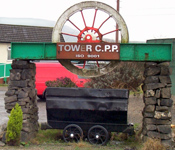
The miners of South Wales have become accustomed to the word betrayal. There were the miners who gave up their health in pursuit of black gold, yet were denied sickness benefits by Government penny-pinching even though their lungs were full of dust.
There were the miners who were promised new jobs and a bright future when their pits shut down - yet who still languish on the dole.
There were the miners who fought like lions for a year to keep their pits open and their communities alive yet who in the end were let down by the donkeys of the NUM national leadership
There were the miners commemorated in the Echo supplement who down the centuries have given their lives for the South Wales coal industry, yet are without a permanent memorial.
And then, there are the miners of Tower Colliery-
How grievous was the betrayal they suffered at the hands of British Coal in the months leading up to last April 1995
The corporation, which had slashed production levels weeks before, suddenly ordered the men to double their output.
It said it had no plans to shut the pit, then, three weeks later, did just that.
And when the pit closed on April 22, the South Wales deep mined coal industry seemed finally consigned to history.
But the miners of Tower were not to be so easily written off.
They fought on, and, defying the odds and the tide of 70 years of decline in the coal field, emerged victorious as the new owners of the reopened pit.
At the time of the closure, the Echo asked NUM lodge secretary Tyrone O'Sullivan to record his thoughts in a diary-
On the day the fateful decision was finally taken, he wrote: "That's the death of the pit. But we will be back."
Few believed him. British Coal had claimed the pit was uneconomic and that its main market Aberthaw Power Station was under threat from cheaper opencast coal.
In addition, the industry was about to be sold off, with the possibility that a private mine owner would buy the Tower site simply to opencast the surrounding area and leave the deep mine in mothballs.
The NUM had no track record in attempting to buy pits, indeed, its national president Arthur Scargill discouraged the practice which he believed conflicted with the unions anti privatisation stance.
But undeterred, the men began putting together a buy-out bid which soon caught the public imagination.
Cash donations rolled in from all over the world. An art auction raised £10,000. The likes of Eric Clapton and Peter Gabriel offered to play benefit gigs.
They could even afford to turn away cash. One unwelcome offer, from London gangsters the Kray Twins, was firmly rebuffed.
Within a few weeks, enough cash had been raised to cover the legal and administrative costs of around £200,000.
A group of 170 miners pledged £8,000 of their redundancy money to make up the lion's share of the bid.
And financial consultants, Price Waterhouse put together an investment package, headed by Barclays Bank, to bring the total bid to more than £2m.
There is no doubt that the emotion and public sympathy generated by the men's earlier closure fight helped inspire the men to go ahead with the ambitious plan.
Crucial support too came from Welsh Secretary John Redwood, who could see the political advantages for the Government in selling to the miners. But the ultimate success of the miners' buy-out was down to its sheer professionalism.
It soon became clear that they were more than just a ramshackle collection of union men trading on past glories and public enthusiasm.
They brought in British Coal's former Smith Wales area boss, Philip Weekes to be chairman of the new company.
They gave up the right to remove managers from the board in a move designed to reassure the banks. And, though it must have been tempting for the men to try and run the pit themselves, they opted to bring in a seasoned former British Coal manager in Cliff Jones, from Bettws Colliery, On December 23 last year, the miners finally returned to the pit as the new owners.
The company now employs 239 men will produce 450,000 tonnes of coal this year, is developing three new seams, and has identified markets for up to l.5m tonnes of high quality Tower anthracite.
During the 1984 miners' strike, Tyrone O'Sullivan uttered the words “We can’t lose, we've got too much history on our side." He was wrong then.
But the miners still have history on their side. And at the moment, they are winning.
Man Who Breathed Life Into The Mine
TYRONE O'Sullivan is the hero of the moment in the South Wales coal industry.
A man who, in the past 12 months, has proved that there is life yet in deep mining in the region and who, against the odds, led his band of men to reopen a pit which British Coal had said had no future.
There is no honour the miners would not throw at the man they call "Tyrone Power." Some have even described him as the Greatest Living South Walian. Yet, etched in that craggy face is the unmistakable mark of past tragedy.
For Tyrone O'Sullivan comes from a family of miners who, for generations, have paid the ultimate price for coal.
His father, great grandfather and two great uncles all gave their lives for the industry.
His great grandfather Thomas Watkins and his sons Thomas, 17, and Morgan, 14, were all killed at Maerdy Colliery in one of the most dreadful disasters in the history of the coalfield.
They were among 89 men who, on December 24, 1885, went underground never to return, leaving a val community which had been looking forward to Christmas shrouded in despair.
But if Tyrone O'Sullivan seems bound to Tower by an unshakeable bond of commitment, a commitment that refused to let the pit die even when all seemed lost, then it is probably because it is the pit that claimed the life of his father, David.
The father had given his life for the pit, surely the least his son could do was to keep it alive?
Mr O'Sullivan senior was killed in a roof fall at Tower on March 6th 1963.
A staunch union man like his son was to become, he had been the secretary of the local branch of the pit deputies' union Nacods.
Tyrone, already himself a Tower miner, was 18 years old at the time.
But although Tyrone admits his father's death gave him a "deep connection" with Tower, he says the biggest way in which it influenced him was in how it affected his mother.
"What my father's accident did most of all to me was to make me understand what it was like to be a widow and lose your husband suddenly," he told the Echo |
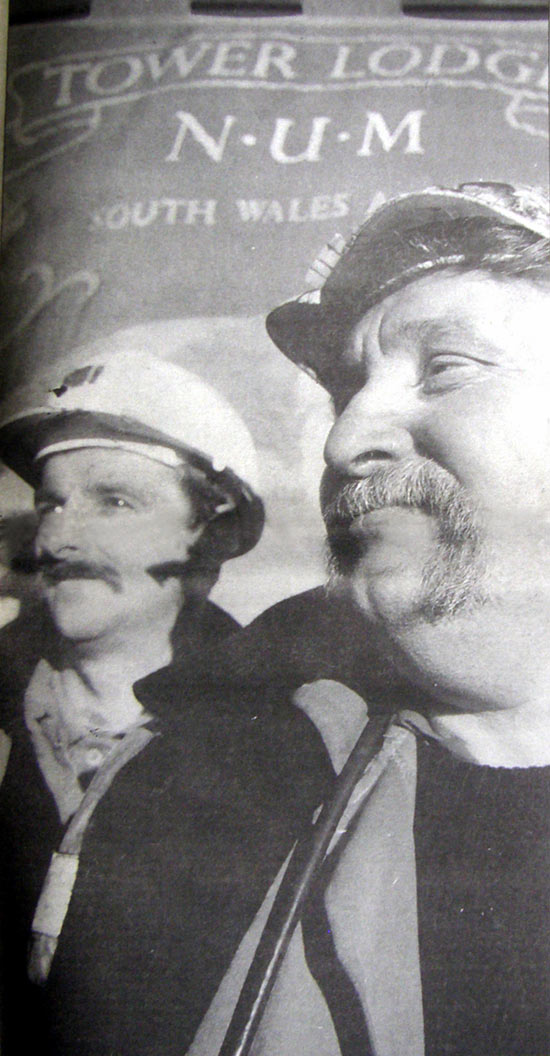
HERO: Tyrone O"Sullivan.
|
It has given me a deeper understanding of what those people are going through."
In future years, many such widows would come to Tyrone in his role as NUM lodge secretary, asking for union assistance in the wake of pit tragedy.
Tyrone has now completed the transformation from firebrand union boss toiling underground alongside the men to industrial peace-keeper working behind a desk at the pithead.
As personnel officer at Tower, he says he will not be going underground again.
But though he may have left Tower's dark tunnels behind him Tyrone O'Sullivan will never leave behind his father's memory.
David O'Sullivan is one South Wales miner who will never be forgotten. |