1875 - Page 1
New Companies
A new colliery company was formed 16th January 1875, and known as the South Normanton Colliery Co Ltd by 18th February. The company was formed for the acquisition of the Hill Top colliery at South Normanton. First subscribers were Thomas Henry Small (Ilkeston), George Small (Denby), Wm Bell Bembridge (Ripley), Robert Argile (Ripley), Arthur William Cursham (Nottingham), and John Thomas Capon (Ripley) all with 40 x £100 shares giving a capital of £28,000.
Berristow pit (Derbyshire) at 92 yards (84m) deep worked by Wilkinson lay nearby.
At Western pit, (Butterley Iron and Coal Co) the named pits of Brands and Seldom Seen lay to the north, Footrill pit to the east, and Britain pit to the west.
Nottingham Guardian
Friday 8th Jan 1875
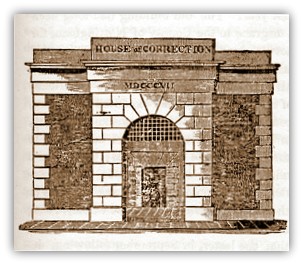 At the Newstead Colliery sinking No1 shaft was 150 yards deep. John Baker, aged 30, and John Isaac, 27, both sinkers and William Sweatman, 21, a stone miner, were charged with attempting to wound Thomas Stack, a sinker, on 27th Nov 1874. With him were Thomas Thomas, George Marshall and William Shepherd. Whilst they were at work a stone fell down the shaft. Some wooden wedges, plus some other wood were also thrown down the shaft. Because the hours of work had been altered from 6 hours to 8 hours the above mentioned 3 were upset. They were accused and found guilty and each were sentenced to 12 months imprisonment in the Southwell House of Correction. At the Newstead Colliery sinking No1 shaft was 150 yards deep. John Baker, aged 30, and John Isaac, 27, both sinkers and William Sweatman, 21, a stone miner, were charged with attempting to wound Thomas Stack, a sinker, on 27th Nov 1874. With him were Thomas Thomas, George Marshall and William Shepherd. Whilst they were at work a stone fell down the shaft. Some wooden wedges, plus some other wood were also thrown down the shaft. Because the hours of work had been altered from 6 hours to 8 hours the above mentioned 3 were upset. They were accused and found guilty and each were sentenced to 12 months imprisonment in the Southwell House of Correction.
Water Broke Into West Hallam Again
Water broke into the West Hallam Wingfield No2 Soft Coal pit on 12th March 1875. The water ran through the old works and burst through into and flooded No1 pit on 14th March. A note on the Rutland colliery working plan states that at the Peewit pit, near the shaft bottom, a brick stopping withstood the pressure when the West Hallam pit near Ilkeston, (Derbyshire) was drowned out.
Inrush At Underwood
At Underwood (Nottinghamshire) water was struck 24th July 1875 and closed down. No mention of any injury or damage to the mine.
Sinking Problems
Mr Shore formed the Lindridge Coal Co to sink a 14 feet (4.27m) dia shaft about 1 mile north of Desford village, Leicestershire. Unfortunately after 133½ yards (122m) of sinking, problems arose, for the site chosen was over the upturned beds of the Thringstone fault, and due to a combination of hard sandstone strata and ingress of water the project was abandoned, because the company ran out of money.
Collieries Sunk in 1875
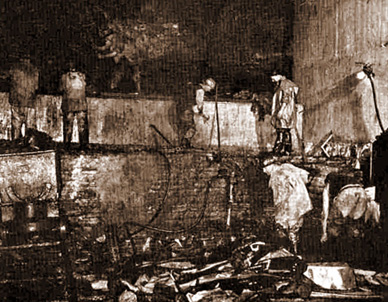
Pleasley Pit Bottom
- Linby colliery (Nottinghamshire) The sinking was completed at 467 yards (427m) to the Top Hard, by the Linby Colliery Co and the pit opened in 1875 however there was a sinking accident towards the end and 4 men were seriously hurt.
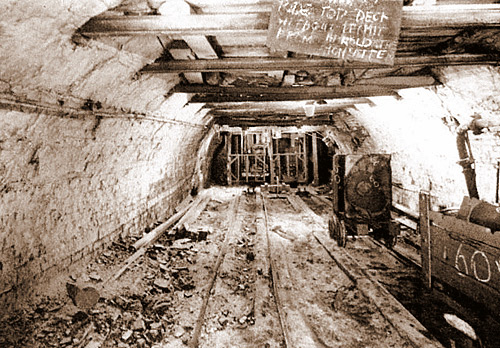 Old Pit Bottom Pleasley (Derbyshire) Similarly the Stanton Iron and Coal Co completed the sinking in 1875, but on 2nd October, unfortunately two sinkers, Thomas Brindley master sinker and Benjamin Dixey were killed. After lighting 2 shots in the shaft bottom at 520 yards (475m) deep, in their haste the men started to ascend the shaft without first steadying the bucket or tub. This began to swing from side to side as it was raised and came into contact with a pump stay, which broke the handle of the tub and they fell to the shaft bottom. Another sinker with them escaped and although seriously injured survived. The Top Hard was reached on 20th February 1875. Pit bottom shown on right. The Worsley Mesnes Iron Co built the winding engines in 1874. There were two covers to close the top of the upcast shaft that were lifted by the cage to form an airlock when the connection was made between the 2 pit bottoms. Old Pit Bottom Pleasley (Derbyshire) Similarly the Stanton Iron and Coal Co completed the sinking in 1875, but on 2nd October, unfortunately two sinkers, Thomas Brindley master sinker and Benjamin Dixey were killed. After lighting 2 shots in the shaft bottom at 520 yards (475m) deep, in their haste the men started to ascend the shaft without first steadying the bucket or tub. This began to swing from side to side as it was raised and came into contact with a pump stay, which broke the handle of the tub and they fell to the shaft bottom. Another sinker with them escaped and although seriously injured survived. The Top Hard was reached on 20th February 1875. Pit bottom shown on right. The Worsley Mesnes Iron Co built the winding engines in 1874. There were two covers to close the top of the upcast shaft that were lifted by the cage to form an airlock when the connection was made between the 2 pit bottoms.
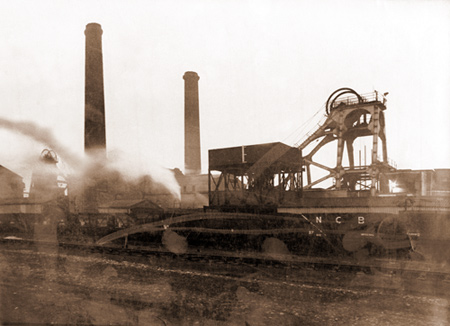 Newstead (Nottinghamshire) The Newstead Colliery Co sank from 1874-1875 to the Top Hard at 476 yards (435m). A similar arrangement with shaft covers for ventilation as at Pleasley applied here where the cage lifted the cover when rising to the pithead and then the cover dropped down again as the cage descended, and would remain so until the mid 1950s when a reorganisation and modernisation programme was carried out. On a visit to Newstead before the reorganisation as the cage went down the shaft my helmet flew off with the force of the rushing air. Surface level was 423 feet (129m) above sea level. Rows of terraced houses were built for the workforce nearby. Newstead (Nottinghamshire) The Newstead Colliery Co sank from 1874-1875 to the Top Hard at 476 yards (435m). A similar arrangement with shaft covers for ventilation as at Pleasley applied here where the cage lifted the cover when rising to the pithead and then the cover dropped down again as the cage descended, and would remain so until the mid 1950s when a reorganisation and modernisation programme was carried out. On a visit to Newstead before the reorganisation as the cage went down the shaft my helmet flew off with the force of the rushing air. Surface level was 423 feet (129m) above sea level. Rows of terraced houses were built for the workforce nearby.
- Awsworth (Awsworth Iron Co) 2 shafts sunk 75 yards (68.5m), Threequarter and Rake, Gillett and Sankey Surveyors. Unsure of sinking dates.
Other Sinkings in 1875
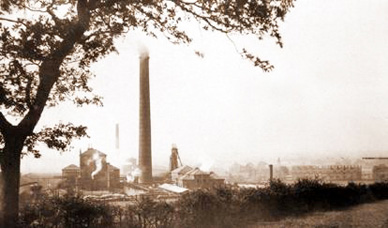 Bestwood (Bestwood Coal and Iron Co) sinking Bestwood (Bestwood Coal and Iron Co) sinking- Blackwell (Mrs HB Whitworth) start
- Clinton (John Beardsley), Brinsley, Coombe, drift and shaft also 2 shafts to Top Hard
- Coleorton (Bug and Wink) (Leicestershire Checkland & Co) 337’ 7” (102.9m)
- Coppice (AM Mundy)
- Denby Hall (Butterley Co)
- Fernilee (W and J Proctor) Hope, Mountain or Yard seam 3’ 10” (1.17m), 2 pits 12 yards (11m) and 30 yards (27.5m), old pit 12 yards (11m)
- Gents Hill (Tyler and Woodward), Clay Cross
- Grassmoor (John Barnes) new sinkings continued with Heanor colliery (Heanor and Marlpool Colliery Co) Hard coal and Comb, depth 44’ 10” (14m), section soft coal Comb 4’ 6” (1.37m), clod or dun 1’ 0” (0.30m), Heanor Hard coal
5’ 0” (1.52m)
- Holme Close (HJ Edwards), Chesterfield
- Hundall (Hundall Colliery Co)
- Ireland sinking (Staveley Coal and Iron Co)
- Kirk Hallam (Thos Whitehouse and Son), Ilkeston
- Lindridge (Leicestershire) , ¾ mile to north of Desford
- Manners near Shipley
- Marlpool (Heanor and Marlpool Colliery Co), Heanor
- Morley Hill (George Pearson and Co), Wingfield
- New Watnall (Barber, Walker and Co) 10 feet dia (3.05m), 342 yards (313m)
- New London, (Digby Coal Co), Eastwood, sinking
- New Silkstone (or Blackshale), would later be named Pye Hill (Jas Oakes and Co), Pye Bridge No1 at 14 feet (4.27m) dia sunk to 220 yards (201m), No2 pit 1866 sunk to Black Rake was deepened to 220 yards (201m)
(Jas Oakes and Co)
- New Pit (John Rhodes), Eckington
- New Sinking (J and G Wells), Killamarsh
- North Staveley colliery at Barlborough was completed (Staveley Coal and Iron Co)
- Oxcroft No3 at Barlborough was sunk 1873-1874 to 534 yards (488m) (Staveley Coal and Iron Co), E448337, N375923
- Peacock (Shorthouse and Gregory), Ilkeston
- Pollington (Jas Oakes and Co), Brinsley
- Potsherds (Thomas G Green), Church Gresley
- Potters (CH Plevins and Co), Newbold
- Ripley Road (Wright, Wheeldon and Co), Heage
- Ripley Road (Wm Key), Ripley
- Sicklebrook Lane (Rhodes Bros), Dronfield
- Snowden Lane, (Swift and Allen), Eckington
- Storforth Lane (Industrial Coal and Iron Co Ltd), Chesterfield
- St John’s (Evans, Wingfield and Co), Staveley
- Southgate (Oxcroft No5) (Shireoaks Colliery Co Ltd)
- Swannington No3 or Synope (Leicestershire)
- Tapton (Tapton Colliery, Coke and Iron Co), Chesterfield
- South Leicestershire sinking (syndicate of George Thorp)
- Thornsett Hey (Thomas Bennett), New Mills
- Unstone Main, (Samuel Saxton), Unstone
- Victoria (Derbyshire and Nottinghamshire Co-operative Mining Society Ltd)
- Victoria (ditto), Stanley
- Western (Butterley Iron and Coal Co), Ripley, shaft bottom 1,325’ 5” (404m) (Kilburn seam 31” (0.78m) thick at
1,301’ 3” (397m) and Morley Muck marker coal 4” (0.1m) thick at 1,087’ 0” (331m)
- Westfield (Gosling and Co), Eckington
- Westwells (Joseph and Geo Wells), Eckington
- Whittington Silkstone (Whittington Silkstone Colliery Co Ltd), Chesterfield
- Wollaton sunk 1872-1874 (New and Oldnow) was now fully at work. Coal was sent to a wharf at the Nottingham Canal
- Woodhouse (Messrs Booker and Co) Silkstone, dip 1in6 on bord
- Butterley Co opened Ormonde at Loscoe and John Beardsley opened another Ormond pit nearby (note the spelling).
- Wingfield Lane sunk to 2nd Waterloo seam opened, Surveyor WF Howard.
- Waterloo, Hough and Grey’s pits were sunk by Albion Clay Co on the NE side of the great Boothorpe fault close to Woodville Railway station to work Raffaree and Bottom seams to a max of 40 yards (37m) deep. Others were pits that worked coal and clay, Blakesley and Co, Cotterill and Co, Donington Co, Knowles and Co and Woodville Sanitary Co.
- Bestwood (Nottinghamshire) , 2 shafts, 13½ ft (4.1m) dia, 60 yards (55m) apart, 60 yards (55m) cast iron tubbing, sunk 364 yards (333m) deep to 5ft 6in (1.68m) Top Hard, by Bestwood Coal and Iron Co, opened in 1875, Headgear wrought iron lattice, DC engine 2 vertical cylinders 36” x 72” (0.91 x 1.83m), one 19ft (5.8m) plain drum, wood lagged and grooved accurately to fit rope, pulley wheels 18ft (5.49m) dia. UC shaft 2 horizontal cylinders 30” x 60” (0.76 x 1.52m) fitted with side valves. Drawing ropes 4½” (0.11m) in circumference, also balance ropes. Ventilation by Guibal 46 ft (14m) x 15 ft (4.57m) wide with 36 revolutions giving 135,000 cfm (cubic feet per minute) at 2” (0.05m) water gauge. Air compressors were used for endless rope haulage and pumping underground. Longwall working was the system employed, the men using Marsaut safety lamps. On the surface there was a chimney 210 ft (64m) high
x 8ft 6in (2.6m) dia for the boilers. 8 fixed screens for both shafts to separate steam, house and cannel coals. 4 tubs at 11 cwts per cage were raised at a time.
Rain Water Percolated In
Heavy rain percolated into Cotmanhay, Eastwood and Old Watnall workings, causing stoppages whilst the workings were pumped dry.
Underground Furnace Replaced
At Albert colliery (Derbyshire) (Derbyshire Silkstone Co) Staveley, the underground furnace was replaced by a Guibal fan of 40 feet diameter x 12 feet wide (12.19m x 3.65m) capable of 200,000 cu ft of air per minute.
In The Trade Depression Period 1875-1879
Miners' Wages Were Severely Cut Leaving Many Starving
Lockout
The 1875 lockout affected the Butterley Co pits again and by August the company had issued notice of a reduction of wages and
Mr Strick the Agent stated that the notice could not be withdrawn due to the state of the industry that was experiencing difficulties. Sir John GN Alleyne the General Manager of the Butterley Company refused to meet any deputation when asked if it could be possible to have an arbitration on the dispute.
Union
The South Yorkshire Miners’ Association launched the Shirland Colliery Co Ltd and Shirland colliery was purchased for £72,000, with a nominal capital of £150,000. The shares were £5 each, with a maximum holding of £250. The Manager and an ex union leader Mr Philip Casey, had been appointed in August 1875 at £250 pa, resigned eventually. The enterprise was doomed to failure from the start and went into liquidation in 1876. During the long transfer of ownership period from June 1874 to July 1875, JJ Barlow from Tibshelf was the Manager.
Renamed
Cinder Hill No1 (Chas Seely and Co) was renamed Babbington colliery. It was sunk in 1840 by Thomas North. He named it after the village of Babbington where he had worked several mines, however it would still referred to as 'Cinderhill' (Quote by a friend, Roger Hibbert, coal face worker in the 1950s).
Changed Hands
Joseph Joel Ellis sold Nailstone sunk in 1862 to Joseph Thornton.
Newhall Field (Shoddy) was closed again in Feb 1875 whilst the shafts were deepened to the Stanhope seam at
310 yards (283.5m) and production would begin again in 1877.
Ambergate changed hands from Bathurst and Co to Ambergate Coal and Brick Co
Joseph Swann who owned South Normanton pit filed for liquidation due to problems within the company and it was purchased by South Normanton Colliery Co and renamed Winksbank colliery. Shady name changed to Shady Birchwood (Chas Seely and Co)
Hasland from Hasland Co Ltd to Industrial Coal Co
At Bestwood the Bestwood Coal Co name changed to the Bestwood Coal and Iron Co.
Hucknall Torkard Nos1 and 2 (Ellis and Co) changed to the Hucknall Colliery Co and was referred to as Hucknall No1 in future
Morton No5 changed from Sir W Jackson Bart and Co to Clay Cross Iron and Coal Co
Old Brampton changed hands from JH Dixon to Nichols and Wheatcroft
Pilsley 1,2,3 changed from Holdsworth and Coto Pilsley Colliery Co
Stretton changed hands from Round and Co to Stretton Colliery Co
Woodhouse Lane Eckington, changed hands from Hardwick and Brailsford to Woodhouse Lane Colliery Co.
A ‘bat scrattin’ belt was installed on the screens at Park House No4 at a cost of £700 to improve the sorting of the coal (Executors of Sir William Jackson, Bart).
Mansfield Viaduct Completed
 The magnificent 15 arch railway viaduct in Mansfield was completed. The stone had been excavated from a deep cutting at Langwith. The magnificent 15 arch railway viaduct in Mansfield was completed. The stone had been excavated from a deep cutting at Langwith.
The rail line was opened up to Worksop in June 1875. (During 2003 / 2004 the viaduct would be cleaned, almost restoring it to its original colour). This line would open up collieries to the North starting a boom in the Unstone area.
Robinett’s Cut
A canal spur called the Robinett’s Cut at Cossall was completed in 1875.
Deepened
An old shaft at Pye Bridge down to the Black Rake ironstone was deepened to 220 yards (201m) and used as No2 shaft for New Silkstone colliery (Jas Oakes and Co).

Photo taken from 'Our Mansfield'
|


