1968 - Page 1
Salaries at January 1968
Management and Technical Grades from 1 Dec 1968
| Grade |
Minimum |
Maximum |
|
| M and T 1 |
£2,780 |
£3,735 |
included Production Managers |
| M and T 2 |
£2,525 |
£3,355 |
included Managers |
| M and T 3 |
£2,190 |
£2,965 |
included Deputy Managers |
| M and T 4 |
£1,800 |
£2,565 |
included Undermanagers |
| M and T 5 |
£1,540 |
£1,970 |
included Engineers & Surveyors |
| M and T 6 |
£1,330 |
£1,675 |
included Assistant Surveyors |
| M and T 7 |
£1,010 |
£1,225 |
Junior posts |
Difficult Geological Conditions At Kirkby
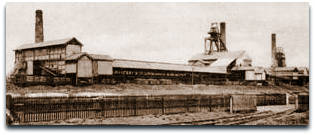
 Difficult geological conditions were experienced at Kirkby Summit (Nottinghamshire). Although £3.75m had been spent in the previous 5 years in an effort to make the unit viable the colliery was placed on the ‘jeopardy’ list on 27th February 1968. Difficult geological conditions were experienced at Kirkby Summit (Nottinghamshire). Although £3.75m had been spent in the previous 5 years in an effort to make the unit viable the colliery was placed on the ‘jeopardy’ list on 27th February 1968.
Clifton To Close
Noel Smith Director of South Nottinghamshire Area also recommended on 3rd April that Clifton should close by September 1968, due to the low quality coal and rising labour and materials costs. It was a bitter blow to the workforce who had boosted output in the weeks previously. The pit now though was 100 years old.
Output
Output for the year 1967-1968 for North Nottinghamshire Area was 10,988,068 tons with a total of 19,067 men; South Nottinghamshire 12,058,931 tons and 21,126 men.
The output record at Sutton (North Nottinghamshire) was broken with 13,300 tons on 16th March 1968 and at Pleasley (North Derbyshire) with 16,451 tons. However during 1968 geological problems beset Pleasley in the 1st Piper seam which experienced small but severe sandstone-filled washouts, and the pit began to lose money.
There were now only 376 pits in the UK employing 392,000 men and boys and the output per man per year had risen to 420 tons.
Parliament
Minister of Power, Richard Marsh (Lab) was replaced by Ray Gunter (Lab) 6th Apr 1968 - July 1968, but he resigned and was succeeded by Roy Mason (Lab) from 6th July 1968-1969. He gave the ‘go ahead’ for Nuclear power stations.
Power Station Opened
The large 1940MW coal-fired power station at Ratcliffe on Soar was opened. This was a major boost to the local mines.
Clean Air Act
The Clean Air Act 1968 was passed. Again this would greatly affect sales of coal for use on ordinary fire grates and on boilers used in industry.
Back To Hand-Filling
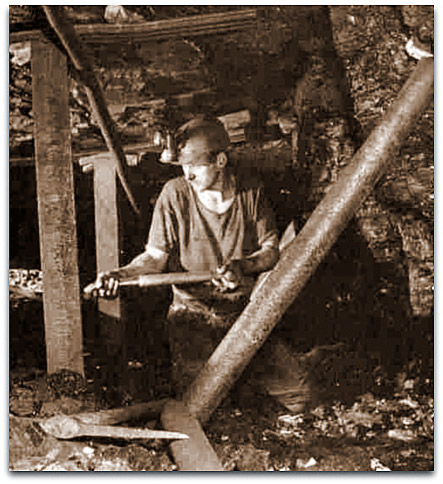 Due to the dirt band widening in the First Waterloo seam at Teversal (North Nottinghamshire) it was decided to go back to hand-filling methods and 6s panel was laid out where the dirt band was middle cut and loaded out into the gob. This was called the ‘lamming shift’. The clean coal was then broken down and loaded out separately. In June 1968 Teversal was losing money, one of the few times in its history. Due to the dirt band widening in the First Waterloo seam at Teversal (North Nottinghamshire) it was decided to go back to hand-filling methods and 6s panel was laid out where the dirt band was middle cut and loaded out into the gob. This was called the ‘lamming shift’. The clean coal was then broken down and loaded out separately. In June 1968 Teversal was losing money, one of the few times in its history.
Bentinck Surface Drift
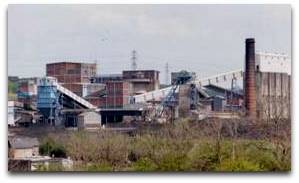
The 1 in 4.2 surface drift conveyor down to the Blackshale horizon at Bentinck (South Nottinghamshire) became operational in August 1968, and at 900 tons an hour dispensed with coal winding at all 3 shafts. An output of 5 to 6,000 tons a day from the Waterloo, Low Main and Blackshale seams was anticipated. The Manager of Bentinck also became responsible for the pumping station at Blackwell A Winning.
Miners Offered Jobs At Closure
Until now, any miner who lost his job on the closure of a mine was offered a job at another mine nearby or in another Coalfield.
Redundancy Payments
Under the Redundant Mineworkers’ Payment Scheme 1968, weekly benefits were introduced, in other words, make up pay to 90% of nett earnings for 3 years, for redundant miners over 55 years of age. The object of the Redundancy Payment Act had reduced the flow of miners transferring to other collieries. Many miners at closing collieries would not go near the employment vans on site for fear of being offered ‘suitable alternative employment’ and thereby lose their redundancy payment.
Rehabilitation Centre
The Rehabilitation Centre at Berry Hill was closed and miners with severe injuries were catered for at Harlow Wood Hospital, where a mock up underground gallery was set up for the injured miners to practice during recovery to assist them in returning to work.
Great Northern Railway
On 26th May 1968 the Great Northern Railway line in the Leen Valley was closed and by early 1970 the 997 yards (912m) long Annesley tunnel was filled with colliery waste. |


