1979 - Page 2
Teversal Colliery to Close

The decision was made in March 1979 to close Teversal colliery (North Nottinghamshire).
The 1st Waterloo would be exhausted the following year and due to the high mining risks involved, the possible working of the Clowne seam, being so close to the water bearing strata, although the seam was worked at nearby Bramley Vale drift mine at Glapwell (North Derbyshire), the NCB were not prepared to spend £6.6m on a new drift mine to access the seam where at least 2.6m tonnes of coal had been proven by surface boreholes. The decision was reached after careful study by a party of 5, representatives from NCB, NUM and NACODS.
Hydraulic Arch Cropper
A Bretby Hydraulic Arch Cropper with stationary blade, fed from the powered support system at a pressure of 10,000 lbf/m³, (70 MPA) was used with success at Blidworth (North Nottinghamshire) from March 1979 to cut arches at the main gate.
Portable Shield
A portable shield for covering the exposed sides of underground roadway ripping lips immediately after shotfiring was designed by S Wright Deputy Mechanical Engineer at Babbington. The shield made from tubular steel frame 36” x 24” (0.91 x 0.61m) weighing 20lb which could be hooked onto brackets onto the top horsehead.
Inventions
There were rewards for 6 North Derbyshire men for their inventions. One was awarded £500 for inventing a series of spring loaded switches at various levels in a 1,500 tonnes capacity vertical bunker at Markham, to relay to the surface control room. Another was awarded £200 for a warning device on dumper trucks, which sent a signal by means of a radio transmitter to the control room if the dumper truck was tilted at more than 15º for more than 12 seconds, and was backed up by two-way communication. £100 was awarded for modifications to the bucket of a rubber-tyred coal moving bulldozer for cleaning up between railway lines and also £100 for a pipe system for emptying slurry ponds. £50 was awarded for a stretcher for injured men, for use underground.
Parliament
 A Conservative Government was returned to power from May 1979 and would last until 1997. Britain’s first woman Prime Minister was Margaret Thatcher 4th May 1979 to 28th November 1990. A Conservative Government was returned to power from May 1979 and would last until 1997. Britain’s first woman Prime Minister was Margaret Thatcher 4th May 1979 to 28th November 1990.
'The Lady's Not For Turning'
Secretary of State for Industry, Sir Keith Joseph MP (Con), 5th May 1979-1981. Secretary of State for Energy, David Howell MP (Con), 5th May 1979-1981. Secretary of State for Trade, John Biffen MP (Con) -1981. The Parliamentary Under Secretary of State for Energy was John Moore MP (Con).
From March 1974 to May 1979 the Labour Government closed a further 22 pits.
NUM
Len Wright (4456) President of Nottinghamshire NUM since 1965, retired. Previously he had been a Mining Engineer for the NUM. In the past he had been Undermanager and Manager at Mansfield and Manager at Blidworth, Welbeck and Rufford. He had started in the industry as a pit bottom lad at Pleasley where he visited to have a photograph taken for the Chad newspaper on his retirement stating, ‘This is where it all began’. Ray Chadburn NUM Branch Secretary at Welbeck succeeded him. In Nottinghamshire there were 34,275 NUM members, in North Derbyshire 11,617 and in South Derbyshire 3,269.
Mines Rescue Station
Peter L Harley (2649) succeeded as Superintendent at Mansfield Woodhouse Mines Rescue Station 1979-1988.
Sir Derek Ezra MBE Re-Appointed
Sir Derek Ezra MBE was re-appointed Chairman of the NCB from July 1979.
Early retirement for miners came down to 60 years of age from 1st August 1979
Free Working Clothes Introduced
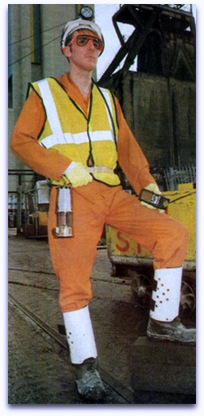 For the first time working clothes were supplied for all, replacing the ‘old pit rags’. Three sets of orange overalls / boiler suits along with 3 sets of grey underwear were issued free. This allowed one set to be worn, one set spare and one set in the wash (free laundry service), when placed in the numbered open-stringed bag kept for the purpose. Now there was no excuse for wearing stinking clothes ‘for ever’ because generally one used to wear pit clothes until they dropped to bits before replacing them. Free issue boots, helmets, goggles, kneepads, coats etc became the norm along with travelling allowances from home to work. By the 1990s extra safety equipment was added. For the first time working clothes were supplied for all, replacing the ‘old pit rags’. Three sets of orange overalls / boiler suits along with 3 sets of grey underwear were issued free. This allowed one set to be worn, one set spare and one set in the wash (free laundry service), when placed in the numbered open-stringed bag kept for the purpose. Now there was no excuse for wearing stinking clothes ‘for ever’ because generally one used to wear pit clothes until they dropped to bits before replacing them. Free issue boots, helmets, goggles, kneepads, coats etc became the norm along with travelling allowances from home to work. By the 1990s extra safety equipment was added.
Conditions for miners had finally moved into the 20th Century.
All Nottinghamshire Pits Practising Methane Drainage
By now, all the 15 pits in North Nottinghamshire Area were practising methane drainage by boring holes up into the strata usually in the return gate and usually over the waste generally using mini-hydrack machines. However only 5 collieries were using the gas at the surface for boilers, the others were exhausting it safely into the general body of the return air underground. Harworth was the first in 1960 to bring the gas to the surface via 10” (0.25m) diameter pipes up the shaft and initially sold the 1,400 cfm methane which was about 70% purity to the local bulb making factory and a coke oven plant. From 1968 to 1971 it was used to fire the boilers and by 1973 supply to the glass bulb factory had ended.
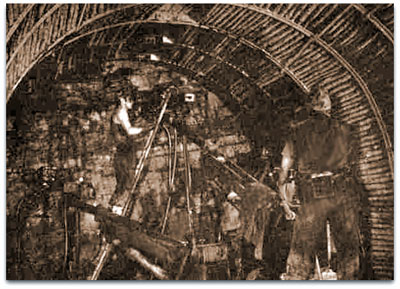 At Rufford (Nottinghamshire) the surface CH4 plant was commissioned in Feb 1970, however a new plant replaced it in late 1974 because of the gas purity. In March 1975 there was a minor explosion in a gas boiler badly damaging it and injuring an attendant. Modifications were made to prevent a further occurrence. At Rufford (Nottinghamshire) the surface CH4 plant was commissioned in Feb 1970, however a new plant replaced it in late 1974 because of the gas purity. In March 1975 there was a minor explosion in a gas boiler badly damaging it and injuring an attendant. Modifications were made to prevent a further occurrence.
A plant was commissioned at Creswell in 1971 and at Bevercotes (North Nottinghamshire) a chain grate stoker boiler was converted to gas burning in 1972.
At Clipstone (North Nottinghamshire) 2 Cochrane vertical boilers were converted to gas burning in 1975 and 1978.
An installation for burning methane at the surface was commissioned at Shirebrook (North Derbyshire) in 1973, the gas coming from 2 faces in the Deep Soft seam.
Welbeck Stockpile
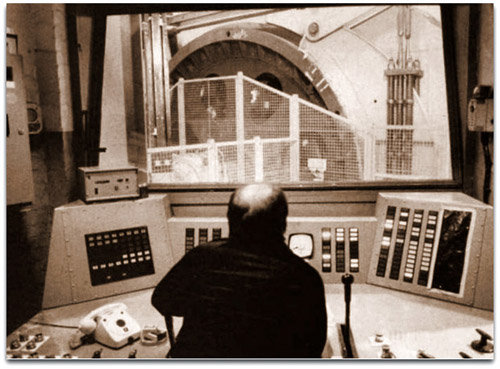 A new ROM (run of mine) stockpiling scheme, the first in North Nottinghamshire Area was installed at Welbeck. The system used a cantilevered boom, and reclamation from the 2,500 tonnes capacity heap was via a vibratory feeder. Most of the coal at Welbeck was used in the cement industry. A new ROM (run of mine) stockpiling scheme, the first in North Nottinghamshire Area was installed at Welbeck. The system used a cantilevered boom, and reclamation from the 2,500 tonnes capacity heap was via a vibratory feeder. Most of the coal at Welbeck was used in the cement industry.
Winding Engines At Ollerton Automated
The winding engines at Ollerton (North Nottinghamshire) were automated and had an override emergency system in a box referred to by the electricians as ‘Metal Mickey’.
Cooling System
A Cooling system was installed underground in an Airway at Ollerton in the Parkgate seam to reduce the temperature by a few degrees at the working face end.
Underground Temperatures
Underground virgin strata temperatures were taken at 6 Nottinghamshire pits in 1975 between March and December. A committee had been set up in 1868 to study temperatures of rocks and there had been 24 reports by 1904. The geothermic gradient, the average rise of temperature with depth had been denoted by 1883, which gave an increase of 1ºF for every 60 feet (18m) of depth, starting at 60 feet (18m) deep, (equating to 1ºC for every 33m of depth):
- Harworth Top Hard 59s Return, 31.8ºC and 29.3ºC air temperature at 897 yards (820m) deep in March
- 77s Intake at 988 yards (903m) deep 31.5ºC and air temperature 29.5ºC in April.
- Clipstone Low Main 65s Intake at 940 yards (860m) deep, 31.1ºC, air temperature 28.0ºC in March
- Welbeck Top Hard 74s Intake at 782 yards (715m) deep, 27.5ºC rock, and air temperature 28.3ºC in July
- Creswell Threequarter 9s face head, 765 yards (700m) deep, 33.2ºC and air temperature 31.5ºC in Aug
- Newstead Tupton Main Intake 32.6ºC rock temperature and 27.0ºC air temperature at 760m deep in August
- Hucknall Blackshale K12s Intake 31.8ºC and 28.5ºC at 674m deep in August.
This gives some idea of the very hot conditions that some men had to work in.
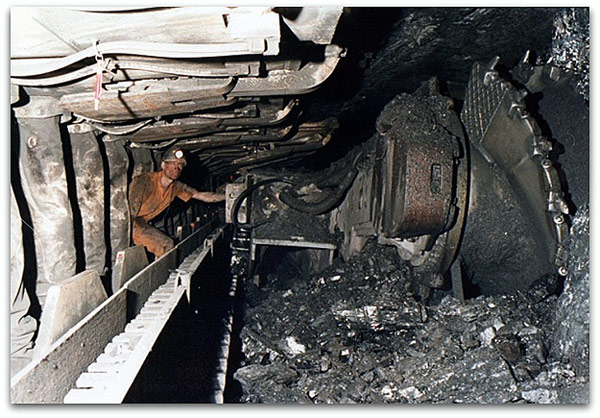 I remember on my transfer to Ollerton in Feb 1971. On my second day there I descended the No2 UC shaft in the garb I was used to at Teversal which was a very cool pit and low seam. As well as a pit helmet, belt and cap lamp and battery and self rescuer plus a pouch for all bits and bobs of surveying equipment, on top of vest and pants I wore a thick shirt, boiler suit, pullover, thick coat, scarf, dog collar for oil lamp, and knee pads and upon reaching the pit bottom I almost melted and had to strip off, the temperature there being plus 86ºF (+30ºC). No wonder I had some strange stares. I remember on my transfer to Ollerton in Feb 1971. On my second day there I descended the No2 UC shaft in the garb I was used to at Teversal which was a very cool pit and low seam. As well as a pit helmet, belt and cap lamp and battery and self rescuer plus a pouch for all bits and bobs of surveying equipment, on top of vest and pants I wore a thick shirt, boiler suit, pullover, thick coat, scarf, dog collar for oil lamp, and knee pads and upon reaching the pit bottom I almost melted and had to strip off, the temperature there being plus 86ºF (+30ºC). No wonder I had some strange stares.
My next visit underground found me in just thin boiler suit over underpants and one was wet through with sweat before doing any manual work. Although the seam height was now in the region of 6 feet (1.8m) I still continued to wear knee pads however, one of the few to do so, habit I suppose, being used to crawling along coal faces at half that height, as it was possible to walk through the Top Hard coal faces with barely a stoop. The dog collar used for hanging an oil lamp whilst crawling through low faces now became superfluous, so a cravat took its place. However it took me quite some time to get used to the thick seam height. I had never seen anyone standing up shovelling on a coal face before either.
Outputs
Since April, Ollerton miners had averaged 25,500 tonnes a week with a face OMS of 17¼ tonnes. By comparison, neighbouring Thoresby colliery were averaging 31,700 tonnes per week with a face OMS of 19 tonnes. 102s Parkgate face achieved 18,475 tonnes in a week, highest ever for a longwall advancing face at the time.
 Both collieries had gone through major improvement schemes, Ollerton being granted £11.75m in the last 3 years, to open up the Parkgate seam, electrify the winders and provide rapid loading facilities, costing £2.3m with up to 150 trains a week being loaded and sent to the Trent-side power stations. An almost identical scheme had been completed at Thoresby receiving £8.2m. A further £4m worth of advanced mining equipment in the form of heavy duty powered supports was to be installed on new coalfaces at Ollerton and Bevercotes (North Nottinghamshire). Both collieries had gone through major improvement schemes, Ollerton being granted £11.75m in the last 3 years, to open up the Parkgate seam, electrify the winders and provide rapid loading facilities, costing £2.3m with up to 150 trains a week being loaded and sent to the Trent-side power stations. An almost identical scheme had been completed at Thoresby receiving £8.2m. A further £4m worth of advanced mining equipment in the form of heavy duty powered supports was to be installed on new coalfaces at Ollerton and Bevercotes (North Nottinghamshire).
Pleasley Linked to Shirebrook
In May 1979 it was decided to link up the neighbouring mines of Pleasley and Shirebrook (North Derbyshire) in order to prolong the life of 106 year old Pleasley which had limited shaft capacity. A £7.7m scheme driving underground roadways between the two pits would  allow heavy duty equipment to be transported to faces at Pleasley and the coal to be raised at Shirebrook which could deal with the extra production, however it meant that the manpower would be reduced by 150. allow heavy duty equipment to be transported to faces at Pleasley and the coal to be raised at Shirebrook which could deal with the extra production, however it meant that the manpower would be reduced by 150.
Total-Station Survey Instrument
Also in May 1979, trials were carried out with a Hewlett-Packard 3820A electronic Total-station survey instrument, which combines electronic measurements of distance and angles by Professor Doug J Hodges BSc, PhD, CEng, FIMinE, FGS, FSCE at Nottingham University. Similar instruments would be used by Surveyors underground to do surveys of workings at the local pits in future. The Gyro test line was in the University lab. Professor Hodges tested many different instruments in conjunction with NCB Surveyors.
NCB Application To Mine Coal In The Vale Of Belvoir
The NCB applied to mine coal reserves found in the Vale of Belvoir under part of North East Leicestershire, Nottinghamshire and Lincolnshire. The preliminary hearing was held on 8th and 9th May at Stoke Rochford near Grantham. There were many objections to the proposal (the Vale Protection Group representing 56 villages and 30 parish councils also by Leicestershire and Nottinghamshire County Councils, the National Farmers union and others, also the incumbent at Belvoir Castle, the Duke of Rutland). The ‘alarm bells should have been heard ringing at that time’, as much later all sorts of problems would arise, and as will be seen later the whole episode was a disaster. The areas for proposed mine sites were some way from major mining areas and it would probably mean that a new village would have to be made at each site to house the miners from the closed collieries. Also there were no major roads only country lanes and the only rail access could be at Asfordby. However the amount of legislation to protect the environment and agreed is listed:
- Public Health Acts 1936, 1961
- National Parks and Access to Countryside Act 1949
- Mines and Quarries Act 1954
- Coal Mining (Subsidence) Act 1957
- Mines and Quarries (Tips) Act 1967
- Water Acts 1945, 1973
- Clean Air Acts 1956, 1968
- Countryside Act 1968
- Water Resources Act 1963
- Rivers (Prevention of Pollution) Acts, 1951, 1961
- Forestry Act 1967
- Health and Safety at Work etc Act 1974
- Control of Pollution Act 1974
- Reservoir Act 1975
- Land Drainage Act 1976
- Ancient Monuments and Archaeological Areas 1979.
Of course other legislation such as the Old Mining Code would have to be adhered to. All new mines after July 1948 have to have Town and Country Planning Permission for underground workings as well as for surface buildings and tipping areas. Infrastructure for access to the mine, by road and rail was a deep consideration. These two were certainly at the top of the list as far as the objectors were concerned, as they did not want their sleepy quiet villages disturbed by the influx of lorries and/or new rail routes, or the noise to go with them.
On 30th October 1979 the Public enquiry began. There were 175 proofs, 231 witnesses (33 from British Coal), 540 additional documents – lasted 6 months. The Inspector submitted his report to the Secretary of State in Nov 1980. He recommended development of 3 sites including Asfordby but no spoil heaps at Hose and Saltby.
At the end of October 1979 the public inquiry into the National Coal Board’s proposed mines in the Vale of Belvoir was ended. Under the NE Leicestershire Prospect around 400 km of line seismic surveying and 80+ boreholes were drilled proving 5 workable seams, estimated to produce 510 million tonnes. The NCB estimated that it would take around 75 years to mine an estimated 500 million tons of coal. I do not believe this could ever happen. The Duke of Rutland was never ever going to let mining proceed in the Vale of Belvoir! QED.
Over 150 witnesses were due to give evidence in what was expected the most expensive inquiry ever held in the country. (Unfortunately the project would fail – see Asfordby Aug 1997).
Pay Claim
The NUM supported a pay claim of 65% that would give a minimum weekly wage of £80 for surface workers and £140 for face workers. Nottinghamshire NUM President Ray Chadburn stated ‘In the next ten years, I believe coal will be too expensive to burn. There should be more emphasis placed on getting the necessary finance and manpower to produce coal for its by-products, particularly petro-chemicals’.
Trackless Haulage
Trackless haulage was introduced at Bolsover (North Derbyshire). Pinwheel chainless haulage system for a shearer coal cutting machine was introduced on a face at Bentinck (South Nottinghamshire). |


