1981 - Page 2
VHF Radio Communication Underground
At Cadley Hill, (South Derbyshire) for the first time, high-speed rope haulage had VHF radio communication for both signals and speech between train and haulage engine house.
HM Inspectorate
- Howard C Evans (10047) joined the Worksop office (previously Deputy Manager Hem Heath).
- Dilwyn Richards (5250) continued as Senior District Inspector along with
- John W Jones (4652) District Inspector
- Fred B Turton (5713) District Inspector
- Fred Arthur Chaplin (3963) District Inspector
- Guy DR Adamson (5391) Inspector
- John Bennington (5046) Inspector
Pay rate for HM Inspectors of Mines at May 1981, £18,830 - £22,835.
Town And Country Planning
The Town and Country Planning (Minerals) Act 1981 was passed to control restoration.
Output for 1980-1981
- North Derbyshire from 11 pits was 8,291m tons, (8,254,551 tonnes), 12,264 men, OMS 3.21 tonnes
- North Nottinghamshire 14 pits, 12,012m tons (11,982,160 tonnes), 18,437 men, OMS 3.04 tonnes
- South Nottinghamshire 12 pits, 8,850m tons (8,825,302 tonnes), 15,803 men, OMS 2.68 tonnes.
Cotgrave Tip
 A part of the reclaimed tip at Cotgrave in South Nottinghamshire Area was transferred to a farmer who grew barley in the first year. North Nottinghamshire Area had pioneered tip restoration in the early 1970s and at all pit tips in the area some reshaping, soiling, grass and tree planting had been done. Derbyshire and Yorkshire left the majority of their tips as they were – grey waste heaps! Attention had been placed on ones seen from major roads, M1 for example – Markham. A part of the reclaimed tip at Cotgrave in South Nottinghamshire Area was transferred to a farmer who grew barley in the first year. North Nottinghamshire Area had pioneered tip restoration in the early 1970s and at all pit tips in the area some reshaping, soiling, grass and tree planting had been done. Derbyshire and Yorkshire left the majority of their tips as they were – grey waste heaps! Attention had been placed on ones seen from major roads, M1 for example – Markham.
Godkin Opencast Site
The Godkin opencast site began in 1981 and lasted several years. This site lay between Langley Mill and Codnor (Derbyshire) and was one of the largest and 12 coal seams were worked. A mammoth excavator capable of clearing 50 to 55 tons in each bite was installed.
Bevercotes
In 1981, Bevercotes (Nottinghamshire) had its highest-ever average manpower at 1,444 followed by 1,443 in both 1982 and 1983.
 Part of the dirt tip here was grassed and returned to farming for cow pasture. Also another area was sown with barley as shown. Part of the dirt tip here was grassed and returned to farming for cow pasture. Also another area was sown with barley as shown.
Underground the normal system of ventilation for mechanised drivages was by main exhaust fan to provide good dust control, however the air temperature was as high as 33½ºC dry bulb and 28½ºC wet bulb giving an effectual temperature of 29½ºC. Air conditioning was installed to try to combat this and improve conditions for working.
The Lingard Box
The Deputy Manager Harry Lingard devised a ‘changeover box’ referred to as the Lingard box, the function of which was to divert the air automatically from forcing duct into exhaust duct and thence to the face of the heading if the exhaust failed. The HMI granted an exemption from Reg 24 (1) (a) of the Ventilation Regulations, 1956 and the first box was installed in 61s heading and effectively reduced the temperature by 7ºC.
The first new style box was installed in 124s heading at Sherwood in August 1981 improving the environment immediately.
Warsop
At Warsop (North Derbyshire Area) the yearly production record reached a maximum of 922,797 tonnes produced by 1,386 men for 1980-1981.
Approval Sought To Work Under Mansfield Town
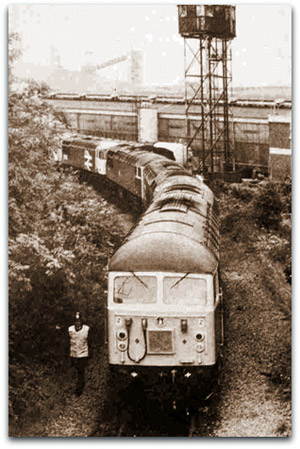 Proposed working under the Mansfield Town area from Sherwood colliery required the NCB to give 12 months notice of the proposed working to Mansfield District Council, the Nottinghamshire County Council and Severn Trent Water Authority under the provisions of the Chancery Court Order 1957. A plan showing the method of work was supplied. Under the Coal Industry Act 1975, sections 2 and 3, a copy of the notice was to be published in the London Gazette and in 2 local newspapers on 2 successive weeks indicating the area of land referred to. Copies to be supplied to District Planning Authority and County Planning Authority as well as copies posted at conspicuous places within the said area. Proposed working under the Mansfield Town area from Sherwood colliery required the NCB to give 12 months notice of the proposed working to Mansfield District Council, the Nottinghamshire County Council and Severn Trent Water Authority under the provisions of the Chancery Court Order 1957. A plan showing the method of work was supplied. Under the Coal Industry Act 1975, sections 2 and 3, a copy of the notice was to be published in the London Gazette and in 2 local newspapers on 2 successive weeks indicating the area of land referred to. Copies to be supplied to District Planning Authority and County Planning Authority as well as copies posted at conspicuous places within the said area.
Mining Museum
The Mining Museum at Lound Hall near Bevercotes colliery (North Nottinghamshire) began to have extended opening times 5 days a week and the first Sunday in the month, due to increased interest from the public.
Annesley
The Deep Hard seam at Annesley (South Nottinghamshire) was reopened in 1981. The Tupton seam was developed via drifts from the Deep Soft level.
In April the last coal train left Annesley via Linby and Hucknall on the old Midland Railway line, when all the coal from Annesley was transported underground by conveyors to Bentinck colliery Coal Prep Plant via a purpose made connection.
Radio-Active Sensors Installed In Vertical Bunker At Ollerton
At Ollerton radio-active sensors were installed in the vertical bunker for measuring the depth of coal contained. The second installation of a 48” (1.22m) wide booster conveyor was installed at the Parkgate main drift as output levels increased. Another installation would follow later.
Dispatch And Receive Haulage System
The first dispatch and receive haulage system was installed at Ollerton in the Parkgate 1in5 return drift.
FIDO
FIDO (face information data on line) was installed at the face. This system monitored the rate of cutting etc at the face and relayed it to the surface.
Suicide
On 4th June 1981, TJ Robert (Bob) Sales (5516) aged 54 committed suicide by revolver. He was a Production Manager North Nottinghamshire Area, residing at Ollerton Hills, Rufford but was sacked over money problems etc. He later found employment abroad at Randburg, Transvaal, South Africa and in 1974 moved to Witbank, South Africa, and in 1980 was employed by Anglo-American Corporation of South Africa Ltd in Johannesburg. He had begun his career in Lancashire and rose through various management grades to Head of Method Study dept but in 1957 was appointed Agent Manager Gedling, No6 Area, and was promoted in 1965 to Group Manager No3 Area. On the re-organisation in 1967 he was a Production Manager North Nottinghamshire Area – 1973.
Cotgrave
Cotgrave (Nottinghamshire) had its highest manpower at 1,822.
Harworth
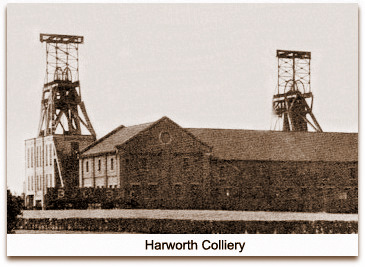 At Harworth, see photo, (North Nottinghamshire) the new 1s Deep Soft panel began production in March and by September an air conditioning unit had reduced the dry bulb temperature from 36ºC to 33½ºC…still very hot! At Harworth, see photo, (North Nottinghamshire) the new 1s Deep Soft panel began production in March and by September an air conditioning unit had reduced the dry bulb temperature from 36ºC to 33½ºC…still very hot!
At Harworth (North Nottinghamshire) the Barnsley Bed or Top Hard seam was abandoned, having been continuously worked since 1925. This seam had caused numerous problems for the management. There were lots of occasions when men had to be sent home due to excess gas in the general body of the airstream. Quite a few heatings occurred in the seam, again requiring men to be sent home. Lastly, several strikes over the years again causing a shortfall in production. The winding engine was re-electrified and up rated in size, and 10½-ton skips installed winding from almost 1,090 yards (1,000m). This was one of the few examples where electric winding had been installed from the sinking of the pit. Another example in Nottinghamshire was Thoresby colliery. Production was concentrated in the Deep Soft seam. Conditions in this seam were trying for the workforce with very high temperatures and excessive emissions of firedamp.
The closure of the textile industry by the Courtaulds Group had resulted in the loss of sales in the North Nottinghamshire Area to the Manchester area.
Aerial Photography Of Tips
Aerial photography of dirt tips began and plans were produced as an aid for survey work on a yearly contract. Plans were produced on a yearly basis as well as volume calculations. Biennial meetings were held on tip management with Colliery and Area HQ staff.
Computer Courses For Craftsmen
The use of familiarisation courses on computer-based monitoring and control systems for craftsmen and operators was introduced.
Vacuum Cleaners
Giant vacuum cleaners were installed at Bevercotes and Blidworth Coal Prep Plants and in an underground roadway at Silverhill (North Nottinghamshire). Special 4” (0.10m) dia pipes were installed to run from strategic points. When a spillage occurred a lightweight 3” (0.076m) flexi-pipe was connected to a socket on the nearest main pipe and the spillage sucked up.
Mines Rescue
Peter Hallam (4279) succeeded as General Manager of Mansfield Woodhouse Mines Rescue Station Apr 1981-1985, (John Blunt retired). He had experience at Whitwell, Shireoaks and Steetley, appointed Sub-Area Planner No2 Area EMD 1947, various posts in No3 Area after 1949, Manager Markham 1957, No1 Area, Deputy Area Safety Engineer North Nottinghamshire 1967-1973, Area Safety Engineer North Nottinghamshire 1973-1976 and District Rescue Stations Manager Midlands District 1976-1981. SJD Fawcett succeeded as District Manager 1981-1986.
NUM
Joe Whelan General Secretary of Nottinghamshire Area National Union of Mineworkers urged the 34,000 Nottinghamshire miners to back the rail unions 100% in their proposed strike, even if it meant breaching the 1980 Employment Act. He stated that “If some of us have to go to jail, then we will go to jail”. He was to die in service. Miners in Nottinghamshire aimed to ensure that if there was a rail strike, then no coal would be transported by any other means.
Shirebrook Re-Organisation
A £21m major re-organisation was completed at Shirebrook with a surface drift, computer control, and increased coal preparation plant, sufficient to accept Pleasley output also (North Derbyshire).
Renishaw Park
By September 1981 a new Coal Prep Plant costing £6½m was operational at Renishaw Park and the first pit in North Derbyshire to have remote control system underground. The 400,000 tonnes a year output was sent to a 200 tonnes storage bunker and then loaded into 32 tonne wagons on a merry-go-round
Ollerton Coal Stock Heap Sprayed By Tar To Appease Residents Nearby
In September 1981 after many complaints regarding dust, from nearby residents, the huge coal stock of approximately 180,000 tons at Ollerton (North Nottinghamshire) was sprayed over with tar, which formed a thick crust and cured the dust problem. This was the first time the exercise had been done and was highly successful.
Parliament
Secretary of State for Industry, Patrick Jenkin MP (Con), 14th Sep 1981-1983. Secretary of State for Energy Nigel Lawson MP (Con) 14th Sep 1981-1983. Secretary of State for Environment, Michael Heseltine MP (Con), 14th Sep 1981-1983. Secretary of State for Trade, Norman Fowler MP (Con) 1981-1983. Secretary of State for Employment, Norman Tebbitt MP (Con) 1981-1983.
Coal From Midlands Exported To Israel
The NCB secured a contract to supply coal to Israel, to be exported through the purpose made dock at Immingham. It included 40,000 tonnes from Nottinghamshire pits – Blidworth, Mansfield and Thoresby and a further 5,000 tonnes from pits in Derbyshire.
Clipstone
Week ending 31st October 1981 an advancing Low Main face at Clipstone produced a record output of 11,911 tonnes.
500 Tons Strata Bunker At Ollerton

A 500 tonnes strata or roadway bunker was operational at Ollerton (Nottinghamshire) in December, the second such installation in the country, the first being in Lancs. Coal was scraped off a slung conveyor belt into a roadway (old 1s Loader Gate) and stored on the floor in times of peak production. When production slackened off, the coal was loaded out again onto a panzer conveyor by means of a single ended shearer with a long scroll drum and delivered via a complicated chute arrangement or jokingly called the ‘Rubic chute’ back onto the main conveyor.
Directive from Deputy Director (Mining) October 1981
Risk Assessment Files - Inrush Regulations, 1979. All problems are taken into account for any working planned at the earliest possible stage and that the Risk Assessment file for the colliery is kept up-to-date. It was agreed that each panel immediately prior to being sealed would be inspected by the Statutory Undermanager and any other relevant person and a factual panel history sheet be made for future reference. This was sent to Chief Mining Engineer, Deputy Chief Mining Engineer, Senior Mining Engineer, Production Manager, Area Chief Surveyor and Minerals Manager and Area Safety Engineer.
Of course the only person to accumulate all the information together, in collaboration with the Undermanager was the Surveyor for the Mine. In my career, at Ollerton as Surveyor from 1971 -1986 and Teversal previously as Apprentice and Assistant Surveyor 1953 - 1970 I was on every final survey of every face that was abandoned, (I doubt if any other Surveyor did this), and a closed survey was carried out from a base in one gate to another base in the other gate along each face line, plus a levelling survey coupled through the face, or a trigonometrical survey if conditions were low or rough, from one bench mark in one gate to a bench mark in the other gate, which was a check on the accuracy of both the dial / theodolite surveys and the levels by closing the polygons. This was carried out as soon as possible after the last coal had been extracted on the panel, and on lots of occasions accompanied the Undermanager on a final visit before the panel was sealed off to note any changes that may have happened, because sometimes it could have been several months from finishing coaling to being stopped off. I was the one to sign the sheets etc so I decided I would see the problems, if any, myself, and not rely on anyone else.
List of panels in numerical order:
- Teversal Dunsil seam....10s, 10s, 10s, 15s, 20s, 30s, 40s, 50s, 60s, 70s, 80s, 90s, 100s, 110s, 120s, 120s, 150s...17 panels.
- Teversal 1st Waterloo seam....1s, 2s, 3s, 4s, 5s, 6s, 7s, 8s, 9s, 10s, 21s....11 panels.
- Ollerton Top Hard seam....1s, 2s, 10s, 20s, 25s, 42s, 44s, 45s, 46s, 57s, 58s, 59s, 62s, 66s, 109s, 110s, 116s...17 panels.
- Ollerton Parkgate seam....1s, 2s, 10s, 12s, 14s, 15s, 16s, ....7 panels.
That makes 52 abandonment surveys in total plus several headings.
Up Bore At Markham
An up bore was drilled from Markham 2nd Waterloo seam workings into Glapwell 1st Waterloo seam waterlogged workings in December to release and pump the water to the surface. Langwith and Glapwell had been connected by drivages through the Scarcliffe tunnel barrier some years previously and there was a direct connection from Ramcroft to Glapwell in the Top Hard seam horizon, water flowing in from the outcrop (North Derbyshire).
Drilling Rig
The NCB purchased a Gardner Denver drilling rig 2500 for exploration purposes.
Recirculation Of Air
Controlled recirculation of air was tried at Mansfield Deep Soft 137s (North Nottinghamshire). The HMI gave an exemption from the rules for a recirculation system due to an emission of gas into the heading when it passed over a Low Main pillar some 88 yards (80m) below. Feeders of methane gas were found close to the roof of the heading giving rise to gas layering. Boreholes were drilled into the roof and floor to drain the gas.
Excessive Convergence
63s Top Hard at Blidworth (North Nottinghamshire) had to be abandoned because of excessive convergence around the junction preventing the stage loader and ventilation equipment being laid up.
Closures 1981
Strathfield (H and C Hartshorne) (Derbyshire) No1 and 2 adits 1950s and No3 1963 and No4 1976. Positions: No1 adit E439006, N361336, 394 feet (120m) above sea level
No2 adit E439008, N361321, 397 feet (121m)
No3 adit E438981, E361071, 373 feet (113.5m)
No4 adit E438976, N361053, 370 feet (112.75m)
No1 shaft E439019, N361330, 406 feet (123.75m).
Seams worked: Blackshale (Bat 3” (0.08m) coal 2’ 11” (0.89m), bind/coal 4” (0.10m), coal 1’ 5” (0.43m)) and Tupton seam worked 1979-81, room and pillar system finished 22nd June 1981.
Surveyors:
- William Erskine (1518), 23/3/72
- A Green (1127) of Fennell, Green and Bates, 22/6/81.
Opencast Working
- Barratts Sitwell, 17/9/1981 - 28/11/1981
- Campbell Brickyard 1 and 2 Ell, 10/1980-9/1981
- Clay Cross Works Deep Hard, 5/12/1981
- Hillside Quarry (Northern Strip Mining Ltd) Swadlincote, NS Merriman, 29/1/1981
- Longwood Hall (Pinxton Balancing Reservoir) Pugh Lewis, Incidental coal First Ell, 442 tonnes, finished 5th October 1981
- Meadowgate Kilnhurst, High Hazel, 2nd St John, Top Hard, 3/2/1981
- Mell (Cutthorpe) and Ext'n Silkstone, Yard, 4/1979-24/10/1980-20/8/1981
- Moorhouse Farm Brown Rake, 2nd Ell, Clay Cross, unnamed, 7/3/1981
- Pilsley Brown Rake, Ell, unnamed, Clay Cross Soft 20/3/1981
- Pilsley Remainder, 2 patches of old works found, 10/12/1979-10/5/1980 and 2/8/1980-20/3/1981, 49,983 tons
- Old Tupton, Tupton and Threequarter, Sep 1978-Mar 1981
- Snowden, Silkstone, 21/2/1981
- Stockley Upper Thin and Lower Thin, 11/4/1981
- Wallis / Gorse Threequarter, 10/1979-26/2/1981, Monument 1m south of Riddings
- Will Upper and Lower Brinsley, 11/6/1981-3/9/1981.
|


