1890 - Page 2
Union
There was a Miners’ Federation Conference at Nottingham 10th-12th April 1890. There were 33 delegates and 116,036 members.
By comparison there was an Annual demonstration at Bulwell Common on 2nd Aug by the Nottinghamshire Miners’ Association with 10,008 members.
William Hallam was elected President of the Derbyshire Miners’ Association 1890-1906.
Wages
The average wage for winding engine men was 5s 6d (27½p) for a 12-hour day.
No Snap Time
At Pleasley it was decreed that no snap time would be taken in the shift (Stanton Iron Co).
Bestwood 'Twist Hands'
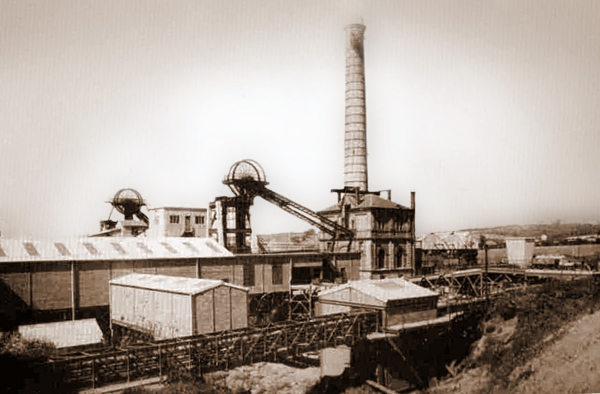 The Butties at Bestwood (Bestwood Coal and Iron Co) were far more important than Butties at the other Leen Valley pits, being in charge of 20 or 30 men in several stalls. They were known as Bestwood ‘twist hands’ and earned up to £15 a week but little or no manual work! It was quite common for men to be sent back up the pit in the morning without earning a penny by these men on the grounds that there was not enough work for all. The Butties at Bestwood (Bestwood Coal and Iron Co) were far more important than Butties at the other Leen Valley pits, being in charge of 20 or 30 men in several stalls. They were known as Bestwood ‘twist hands’ and earned up to £15 a week but little or no manual work! It was quite common for men to be sent back up the pit in the morning without earning a penny by these men on the grounds that there was not enough work for all.
First Installation of Koepe Winding
The first installation of the Koepe system or friction winding at a British mine was at Bestwood (Nottinghamshire) (Bestwood Coal and Iron Co). Vertical piston engines were installed also.
The headgear pulley wheels were angled towards one another with the object of reducing side friction. However due to the rope slipping after it was oiled, the system was abandoned after a short time.
Park House
At Park House mine (Derbyshire) the ‘gaffer’ was Mr Dunn. The General Manager of the Clay Cross Co was Charles Binns. George Howe was in charge of the sinking and H Green was the contractor. The two shafts were 195 yards (178m) deep, one at 12 feet 6 inches (3.81m) diameter and the other 10 feet (3.05m) diameter. The Company invited one hundred men to a dinner following the completion of the sinking.
First Strike At Kirkby Summit
On 1st August 1890 the new mine Kirkby Summit (Nottinghamshire) suffered its first strike when the Butterley Co refused to pay the full 5% increase in wages due. The company relented after a week and work was resumed.
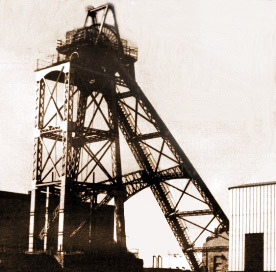 A further 16-week strike occurred at Kirkby Summit (Nottinghamshire) over paying average Leen Valley rates at the new pit. The colliers sought a getting price of 2s 4d (11½p) a ton which was the common rate at pits nearby. The Top Hard was now 4 feet 3 inches (1.3m) thick. The Butterley Company refused and brought in ‘blackleg’ labour, but pickets turned these away. Eventually the company agreed by 23rd August. There was a further strike in December 1890 over concessionary coal for banksmen. A further 16-week strike occurred at Kirkby Summit (Nottinghamshire) over paying average Leen Valley rates at the new pit. The colliers sought a getting price of 2s 4d (11½p) a ton which was the common rate at pits nearby. The Top Hard was now 4 feet 3 inches (1.3m) thick. The Butterley Company refused and brought in ‘blackleg’ labour, but pickets turned these away. Eventually the company agreed by 23rd August. There was a further strike in December 1890 over concessionary coal for banksmen.
Explosion At Brockwell
There was an explosion at Brockwell in Aug 1890 and 2 men were injured.
Strike at Pilsley
In September 1890 at Pilsley 1,2,3 (Pilsley Colliery Co) the miners came out on strike until every man had joined the union.
Hartington Fan
At Hartington colliery (WC Haslam) a vertical Waddle fan at 30 ft dia (9m) was installed at the UC shaft.
Average Hours Worked
During 1890 the average hours worked per week were 51½ hours in the Alfreton district, 54 hours at Staveley and 48 hours at Chesterfield, whereas at Hucknall it was 45 hours but remained at 47 hours at Bestwood. Travelling times varied in the 2 counties. At Church Gresley it was required that 10 hours were spent at the coalface, at Grassmoor No4 it was 7 hours. At Norwood the travelling time to the face was 90 minutes whereas at Hartington and Ireland it was 40 minutes and at Grassmoor No2 it was only 10 minutes. There was no snap time allowed at Boythorpe, Pleasley, and Mapperley and Stanton collieries. The price of coal at the pithead was 8s 3d (41¼p) a ton.
Inspectorate
Henry Richardson Hewitt was appointed as an Assistant Mines Inspector for the district.
Coal Thickness
At Portland pit Kirkby, (Nottinghamshire) it was stated that the Top Hard coal varied between 3 feet 6 inches (1.07m) to
5 feet (1.52m) thick but was now lying in an irregular position. By comparison in Derbyshire, the Hard coal (Deep Hard) at Loscoe was only 32 inches (0.83m) thick and the Soft coal (Deep Soft) 12 inches (0.30m), whereas the Langley Hard was about 36 inches (0.91m) thick. The Top Hard, Lower Hard and Kilburn (lowest workable seam above the Ganister coal) were also worked – Butterley Iron and Coal Co.
Shirland Fan
A 12’ 6” dia x 6’ 0” wide (3.81m x 1.83m) side inlet Cappell fan was installed at Shirland.
Lammas Coal Wharf
Sutton Lammas coal wharf opened in 1890 and a gang line led from Brierley (later named Sutton) colliery.
Vigorous Recruitment Campaign
The Nottinghamshire Miners’ Association began a vigorous recruitment campaign and medals were issued at Linby, Annesley, Newstead, Bestwood and Hucknall pits. They began to wear the medals from January 1892 to show that they were unionists.
Output
Derbyshire output for 1890 was 10,455,974 tons produced by 32,285 men at 335 pits at 323 tons/man/year. Nottinghamshire output 6,681,976 tons produced by 18,853 men at 44 pits at 364 tons/man/year.
The price of a ton of coal at the pithead was 8s 1½d (40½p).
Fatal Accidents 1890
Clay Cross No7 Park House William Ainsworth (47) fall from a pothole 31 Mar 1890
At noon on 14 Jul 1890 Mr Hazelby the Enginewright (Renishaw Iron Co) stepped out of the way of some trucks of coal being hauled up an incline but stepped into the path of some empty trucks coming down and was fatally injured by fracturing his skull.
There were 64 fatal accidents during the year including: –
Southgate Thomas Lister (14) 1 Sep 1890
Eastwood William Knighton (32) 27 Nov 1890
Coleorton No3 (Bug & Wink) (Checkland & Co) Benjamin William Johnson (14) Bank lad, crushed between railway wagons 18 Jan 1890
Coleorton No3 (Bug & Wink) Frederick Allen Philips (22) Loader, coal fell and knocked out a wooden prop and the roof fell on him 31 Mar 1890
Staunton Harold Joseph Stinson (36) killed by fall of roof in pit bottom 6 Feb 1890
Overall the year was good for coal. |


