|
Workington’s Mining History
Information Document
Patrick Robertson
24 June 2020

Fatalities 28th July 1837
Click Here for More Information About Individuals at Durham Mining Museum
 |
Allison, Thomas, left a wife and a large family |
| |
Brough, John, left a large family |
| |
Brough, Jonathan, left three orphan children |
| |
Cain, Hugh, unmarried |
| |
Craney, Richard, left a wife and family |
| |
Darling, Martin, aged boy |
| |
Ditchburn, Thomas, unmarried |
| |
Dobson, Philip, left three children |
| |
Frill, Daniel, left a wife and family |
| |
Gambles, James, left a wife and a large family |
| |
Green, Robert, left a wife and four children, son of Thomas and father of Thomas |
| |
Green, Thomas, son of Robert and grandson of Thomas |
| |
Green, Thomas, left a wife and family, father of Robert and grandfather of Thomas |
| |
Hayton, William, unmarried |
| |
Huids, Thomas, left a wife and family |
| |
Johnstone, Thomas, left a wife and family |
| |
Magee, John, left a wife and two children |
| |
McKitten, George, unmarried |
| |
Mountjoy, Robert, aged boy |
| |
Mulligan, John, left a wife and family |
| |
Mulligan, Robert, young man |
| |
Murrow, Jeremiah, unmarried |
| |
Sharp, Joseph, unmarried |
| |
Sides, John, left a wife and a large family |
| |
Stubbs, William, left a large family |
| |
Wilkinson, William, left a wife and eight children |
| |
Young, John, left a large family |
All names found
Those names marked with, have a web page providing individual details of the accident, the page may also include a photograph of the deceased. Click on the symbol next to the name to see the web page.
| 01 Aug 1837 |
Melancholy Loss of Life and Property (Cumberland Pacquet) |
| 04 Aug 1837 |
Melancholy Loss of Life and Property, (From the Cumberland Packet.) (The Times) |
| 05 Aug 1837 |
Dreadful Catastrophe at Workington (Whitehaven Herald) |
| 19 Sep 1837 |
Meeting of the British Association at Liverpool (Cumberland Pacquet) |
| 27 Sep 1837 |
The Late Coal Mine Accident at Workington, Subscription in Liverpool (Cumberland Pacquet) |
| 08 Sep 1927 |
The Ill-Fated Bella Mine (Whitehaven News)
| Date: |
28th July 1837 |
| Colliery: |
Workington |
| Cause: |
Inundation |
| Lives Lost: |
27 |
|
|
|
On July 28, 1837, Workington Colliery, on the coast of Cumberland, was inundated by the sea, and the Isabella, Union, and Lady pits submerged. Up till ten months previous to the date of the accident, Mr. Matthias Dunn had the management of the colliery. After Mr. Dunn's departure, a considerable robbing or removal of the pillars under the sea was carried on; a proceeding, the danger of which was a matter of common talk about the town. Disaster was foretold by many. A number of the colliers left the work. A correspondence on the subject took place between those on the spot and Mr. Dunn, who, on account of the imminence of the danger, submitted the matter to a north of England coal-owner, and induced him to write to Mr. Curwen, the owner of Workington Colliery, drawing his attention to the risk that was being run. But no steps were taken, till eventually a crush ensued, and the sea burst in on the evening of the day above mentioned. Had the accident occurred during the day, the number of lives lost would have been greater. As it was, it is variously stated at from twenty-seven to forty human beings, and an almost equal number of horses (Dunn's Coal Trade, p. 102; Win. and Work., 2nd ed. 198; Child. Employ. Com., Append. i., pp., 300, 307, 878; 1849 Report, pp. 494, 609).
| Source: |
Annals of Coal Mining and the Coal Trade by Robert L. Galloway. Published in 1898. |
|
|
| 01 Aug 1837 |
Melancholy Loss of Life and Property (Cumberland Pacquet) |
| 04 Aug 1837 |
Melancholy Loss of Life and Property, (From the Cumberland Packet.) (The Times) |
| 05 Aug 1837 |
Dreadful Catastrophe at Workington (Whitehaven Herald) |
| 19 Sep 1837 |
Meeting of the British Association at Liverpool (Cumberland Pacquet) |
| 27 Sep 1837 |
The Late Coal Mine Accident at Workington, Subscription in Liverpool (Cumberland Pacquet) |
| 08 Sep 1927 |
The Ill-Fated Bella Mine (Whitehaven News) |
- Great Pit Disasters, 1700 to present day by Helen and Baron Duckham, Published by David & Charles, 1973
- Northumberland & Cumberland Mining Disasters by Maureen Anderson, Published by Wharncliffe Books, 2009, ISBN 1-845630-81-5
| 01 Aug 1837 |
Melancholy Loss of Life and Property (Cumberland Pacquet) |
| 04 Aug 1837 |
Melancholy Loss of Life and Property, (From the Cumberland Packet.) (The Times) |
| 05 Aug 1837 |
Dreadful Catastrophe at Workington (Whitehaven Herald) |
| 19 Sep 1837 |
Meeting of the British Association at Liverpool (Cumberland Pacquet) |
| 27 Sep 1837 |
The Late Coal Mine Accident at Workington, Subscription in Liverpool (Cumberland Pacquet) |
| 08 Sep 1927 |
The Ill-Fated Bella Mine (Whitehaven News) |
| Source: |
Annals of Coal Mining and the Coal Trade by Robert L. Galloway. Published in 1898. |
|
|
- Great Pit Disasters, 1700 to present day by Helen and Baron Duckham, Published by David & Charles, 1973
- Northumberland & Cumberland Mining Disasters by Maureen Anderson, Published by Wharncliffe Books, 2009, ISBN 1-845630-81-5
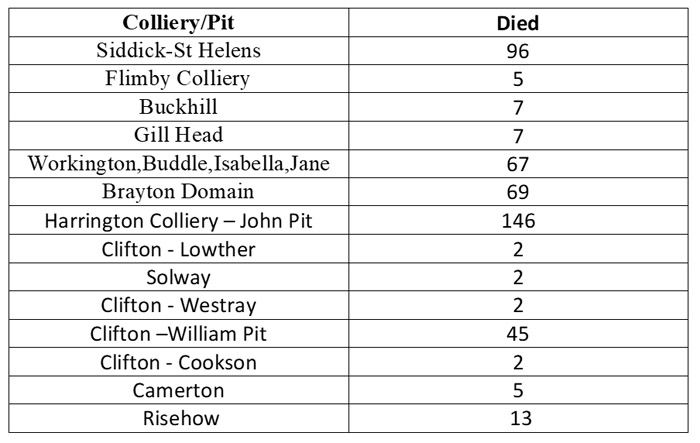
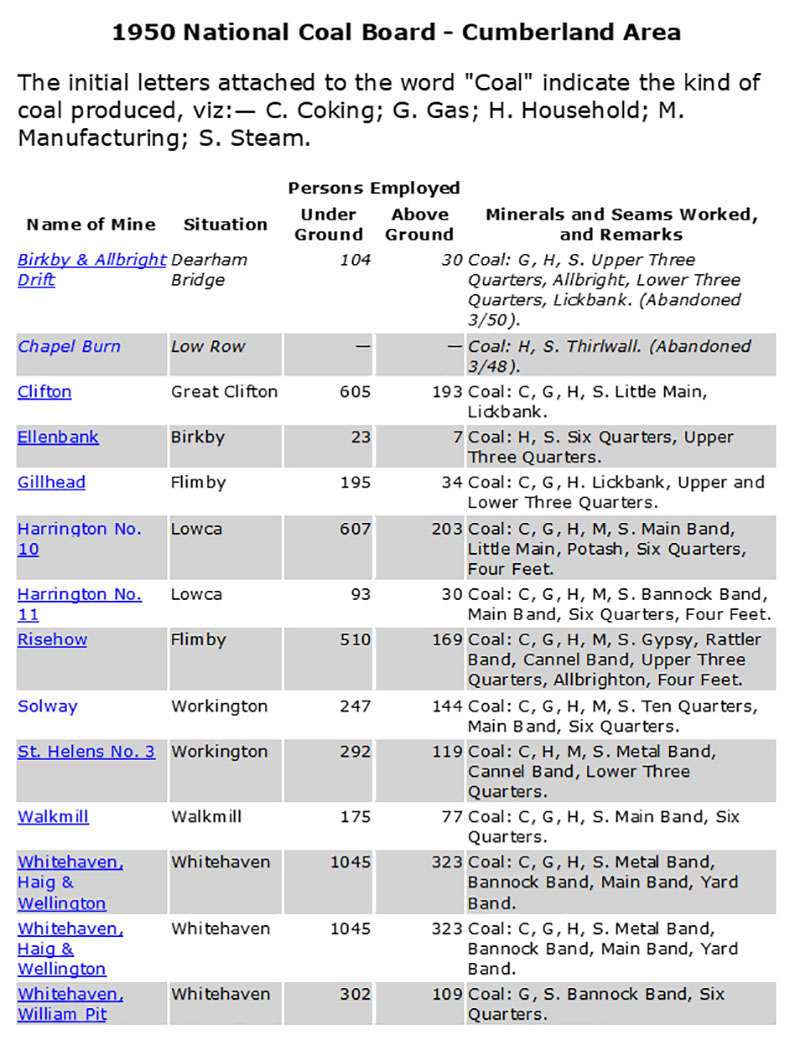
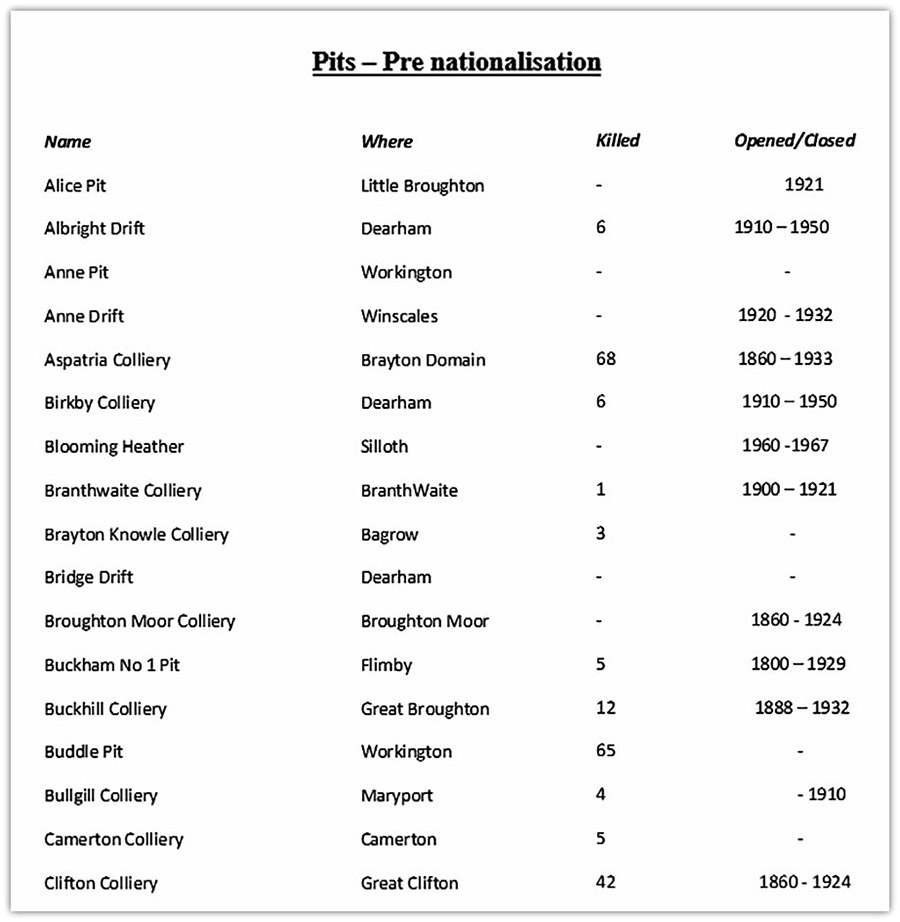
Sadly they were plenty of other deaths, again in the normal working day and If you click onto the pits near Workington you will be able to access the given number of fatalities with the name for each pit, The exact number may never be known because there was no accurate recording of deaths in coal mining until early in the 19th century.
The only permanent structure in Workington that records the importance of mining to the town is the Cenotaph situated in Vulcan’s park. The Cenotaph was unveiled in June 1928; the east face depicts a miner and the west face, steel rails both industries that were vital to the prosperity and growth of the town. I note that the memorial to the Curwen’s placed in Curwen place, mentions the mines but not the miners.
Jane Pit being the best surviving example of the ornate castellated style of colliery architecture that was a feature of the early Cumbrian coal industry. It surely stands testament to the building skills of the 19th century stonemasons, however it does not tell the story of working underground in these Victorian hell holes Prior to 1842 whole families were forced to work together to earn enough money for the family to live on, toiling underground in conditions that were truly horrific On 4 August 1842, a law was passed that stopped women and children under ten years from working underground in mines in Britain.
|


