1991 - Page 7
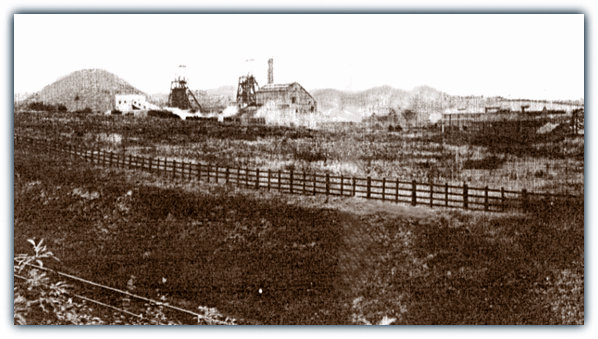
Gedling Closed After 89 Years
- Continued -

Blackwell Mining (Company set up by Ged (Gerald) Mason, ex Undermanager Ollerton) was set on to do some salvage work, however the distance inbye catching 3 paddies left only about 3 hours working time, so the contract was abortedEric Fletcher ex Colliery Overman Ollerton told me).
In 1998 operations to extract discarded coal from the tip began, with an expected 400,000 tonnes recovery by tip washing from the 4 million tonnes of waste tip, however after around 200, 000 tonnes of small coal had been recovered by 2001, Nottinghamshire County Council withdrew from its side of the partnership with British Coal and operations ceased.
UK Coal continued to transform over 300 acres of the site as a park, as part of the bargain. By 2004 Gedling Borough Council and Nottinghamshire County Council were planning extensive work including tree and bush planting, car parking, visitors’ centre, bridleways, etc and a possible observation tower, cable car and restaurant to transform the once derelict site into a beauty spot.
Before closure 10 gallons of water per minute from Top Hard level at 418m deep was discharged at the surface via No1 shaft into the Ouse Dyke.
A Peckett 0-4-0 steam tank engine was used on the surface for shunting duties.
Locomotives used on the surface 4’ 8“ (1.435m) gauge
- Catherine 0-6-0 ST 1903
 Audrey 0-6-0 ST 1911 Audrey 0-6-0 ST 1911- Queen 0-4-0 ST 1923 ex BA Collieries
- 0-4-0 ST 1917 ex Clifton
- 0-4-0 DE 1957 ex demo
- King George 0-6-0 ST 1942 ex Linby
- 0-6-0 ST 1938 ex Steel, Scunthorpe
- 0-4-0 DM 1955 ex Hucknall
- Susan 4wDH 1966
- Gillian 4wDH 1967 new
- Simon 0-6-0 DE 1958 ex BR Lincoln
- Julian 0-6-0 DH 1964 ex Cotgrave
- Fenella 0-6-0 DH 1963 ex Linby.
Underground locos 3’ 6” (1.07m) gauge
- 4w BEF Atlas 1945 from St Helens, Lancashire.
Underground locos 3’ 0” (0.91m) gauge
Underground 2’ 0” (0.61m) gauge
- 4w BEF Atlas 1945
- 4w BEF Atlas 1945
- No1 4w BEF Atlas 1945
- No2 4w BEF Atlas 1945, both ex Bestwood
- 0-6-0 DMF 1953
- 0-6-0 DMF 1953
- Charles 1 0-6-0 DMF 1953
- Gedling No4 0-6-0 DMF 1954
- No5 0-6-0 DMF 1954
- No6 0-6-0 DMF 1954
- No7 0-6-0 DMF 1955
- No8 0-6-0 DMF 1957
- No9 0-6-0 DMF 1957
- 1R 4w DMF 1958
- 2R 4w DMF 1958
- 3R 4w DMF 1958
- 4R 4w DMF 1969
- 5R 4w DMF 1960, all new
- 4w BEF 1943
- 4w BEF 1943, ex Calverton
- No10 0-6-0 DMF 1962
- No11 0-6-0 DMF 1962, new
- 0-6-0 DMF 1959, 0-6-0 DMF 1956, ex Calverton
- No12 0-6-0 DMF 1956
- No4 0-6-0 DMF 1953 ex Bestwood
- No1 0-6-0 DMF 1956 ex Bestwood Training Centre
- 4w DMF 1958 ex Calverton
- 4w DHF 1982
- 4w DHF 1982
- 4w BEF 1984
- 4w BEF 1984
- 4w-4w BEF 1987
- 4w-4w BEF 1987
- 4w-4w BEF 1987
- 4w BEF 1987
- 4w BEF 1987
- 4w-4w BEF 1989
- 4w-4w BEF 1989
- 4w BEF 1987, all new.
Manpower: Digby Colliery Co
- 1936: 1900: sinking 67, 121 s/f (188 men) (first horse down the pit was called Kruger and in 1924: aged 26 was sent to Wembley Mining Exhibition)
- 1902: 121 u/g developing High Hazles (Hazel) and Top Hard, 129 s/f
- 1903: Top Hard, 410 men
- 1904: 111,765 tons, 350 men and boys HH, 143 men and boys TH, 125 men and boys on s/f
- 1905: 57,624 tons Top Hard, 111,320 tons High Hazel, total 168,944 tons, 742 men
- 1906: 128,619 tons, 503 HH, 109,394 tons, 302 TH, total 238,013 tons, 180 s/f
- 1907: 165,377 tons, 594 HH, 170,788 tons, 532 TH, total 336,165 tons, 267 s/f
- 1908: 174,051 tons, 669 HH, 170,888 tons, 509 TH, total 344,949 tons, 232 s/f
- 1909: 183,761 tons, 657 HH, 199,400 tons, 544 TH, total 383,161 tons, 230 s/f
- 1910: 191,131 tons HH, 218,221 tons TH, total 409,352 tons
- 1911: 187,874 tons, 685 HH, 363,076 tons, 1,089 TH, total 546,659 tons, 313 s/f, 2,087 men
- 1912: 180,342 tons, 686 HH, 1,108 TH, 366,317 tons, 336 s/f
- 1913: 203,890 tons HH, 390,866 tons TH, total 594,756 tons, 2,327 men
- 1914: 151,713 tons, 690 HH, 370,427 tons, 1,021 TH, total 522,140 tons, 346 s/f
- 1915: 141,447 tons, 481 HH, 373,631 tons, 1,060 TH, 545,078 tons, 339 s/f, 1,880 men, (125 horses, 10 killed by accident, 3 destroyed / injury, 2 going blind)
- 1916: 134,961 tons, 481 HH, 408,794 tons, 1,060 TH, total 543,760 tons, 401 s/f
- 1917: 118,087 tons, 398 HH, 467,564 tons, 1,456 TH, total 585,651 tons, 392 s/f
- 1918: 65,616 tons, High Hazel finished Sep, 488,045 tons, 1,784 Top Hard only, total 553,361 tons, 306 s/f (155 horses, 13 killed by accident, 7 destroyed / injury, 5 going blind, 9 old age)
- 1919: 581,228 tons, 2,119 Top Hard only, 441 s/f, profit £687,780 (159 horses, 13 killed by accident, 9 destroyed / injury, 4 going blind)
- 1920: TH 683,971 tons, 2,597 546 s/f, 3,143 men, (164 horses, 11 killed by accident, 3 going blind, 5 old age), profit £??
- 1921: TH 472,592 tons, affected by strike, TH 2,798, 539 s/f, (161 horses, 4 killed by accident, 4 destroyed / injury,1 going blind, 4 old age), profit £648,435
- 1922: TH 722,007 tons, 2,903, 549 s/f, (159 horses, 5 killed by accident, 3 destroyed / injury, 1 going blind), profit £591,504
- 1923: TH 809,216 tons, 3,188, 558 s/f, (3,746 men) max, (170 horses (max), 6 killed by accident, 9 destroyed / injury), profit £683,956
- 1924: TH 867,866 tons, 3,257, 587 s/f, (156 horses, 4 killed by accident, 8 destroyed / injury, 4 old age), profit £759,789
- 1925: TH 823,150 tons, 2,890, 560 s/f, 3,475 men, (154 horses, 2 killed by accident, 7 destroyed / injury, 2 old age), profit £522,688
- 1926: TH 534,813 tons, affected by strike, 2,927, 548 s/f
- 3,475 men, (156 horses, 6 killed by accident, 3 destroyed / injury, 3 old age), profit £731,003
- 1927: 614,655 tons, 2,282 TH and Low Hazel dev, 552 s/f 2,834 men, (152 horses, 10 killed by accident, 8 destroyed / injury), profit £399,105
- 1928: Quota system 436,256 tons, 1,301 Hazel and TH, 3 coal cutters, 374 s/f, 1,675 men, (103 horses, 7 killed by accident, 4 destroyed / injury, 1 put down) profit £262,394
- 1929: 485,199 tons, 1,339 LH and TH, 8 coal cutters, 394 s/f, 1,733 men, (71 horses, 3 destroyed / injury, 2 put down), profit £312,426
- 1930: 471,826 tons, 1,366 u/g, 8 coal cutters, 408 s/f, 1,774 men, (79 horses, 2 killed by accident), profit £311,496
- 1931: 455,533 tons, 1,412 u/g, 437 s/f, profit £313,629
- 1932: 425,143 tons, 1,437 u/g, 463 s/f, profit £308,871
- 1933: 421,900 tons, 1,208 u/g, 440 s/f, 1,648 men, (33 horses, 3 destroyed / injury), profit £313,629
- 1934: 477,576 tons, 1,279 u/g, 449 s/f, (24 horses, 1 killed by accident), profit £337,403
- 1935: 490,086 tons, 1,212 u/g, 487 s/f, 1,595 men, (21 horses, 1 killed by accident), profit £352,927
|


