Fionn
Just found your website; very impressed.
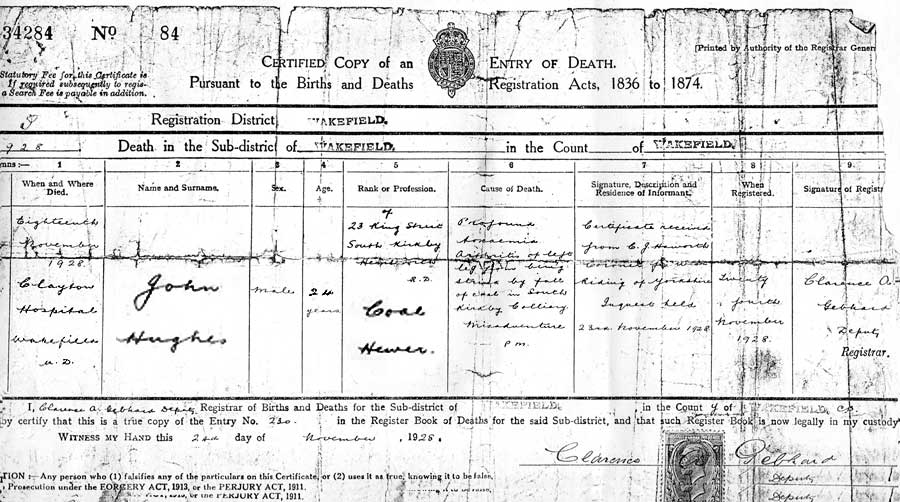
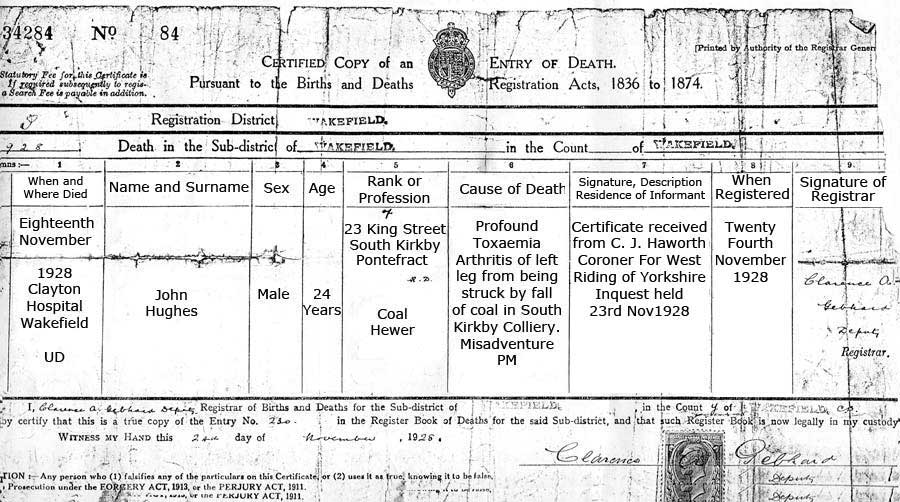
My father died last September and his father had been killed down the pit when my father was four.
I had always been told it was a pit in Heage where my grandfather was killed; but on your website you have a database on mining fatalities in the Derbyshire coalfield which lists James Key being killed by a roof fall at Upper Hartshay in November 1924. I think he was with his father and brothers when he died - if possible I would like to find out some more information - can you point me in the right direction in terms other sources of information.
I have scratched the surface really with my family history but have got back to the early 19th century on the Key side. All the men worked down the pit but all lived into their 80’s which is pretty good going considering how dangerous it was. The exception was James Key who was killed by a roof fall.
My dad never went down the pit because my grandmother (James wife) was against it.
Regards
I spoke to Ripley Library earlier in the week and they have sent extracts from the Ripley and Heanor News from November 1924 giving the inquest details and circumstances of my grandfathers death.
He was caught in a roof fall with two others when 2-3 tons of material fell on them. The two other miners survived fortunately (they were not Jame's brother and father as I had understood). My grandfather was taken to Ripley Hospital and was conscious but died from his injuries which are described as fractured pelvis and internal injuries.
The inquest states that the miners were working in a damp/wet area where there was a crack in the roof which my grandfather had propped and was intending to add more support as they progressed and that no more could have been done - it was accidental in other words. I guess in todays world (and quite rightly) there is no way miners would be allowed to work in those conditions - more modern methods and greater health and safety now.
Thanks again for your assistance.
Alan Key

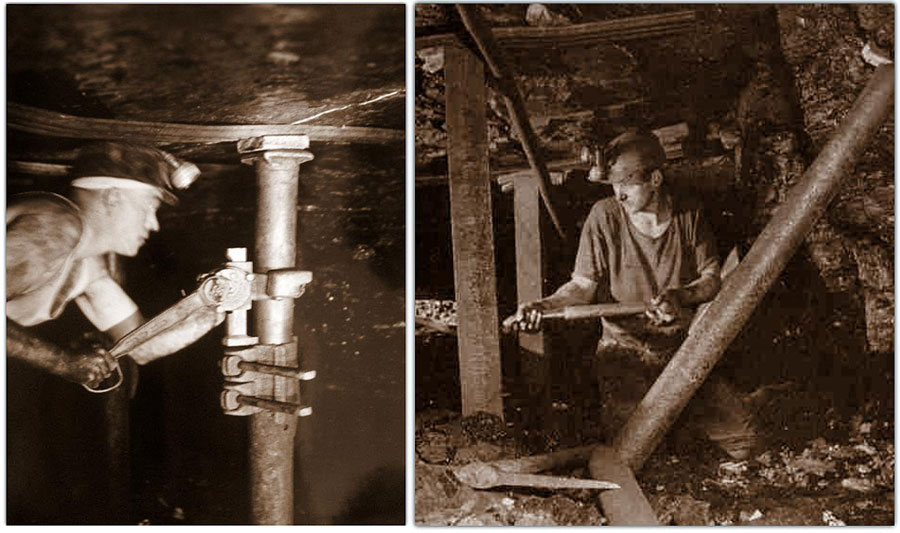
Getting coal...Holing
Alan,
This will give give you some idea as to the dangerous work that your Grandfather did in 1924. Note the lack of roof supports under what appears to me to be very dangerous strata. Most men would find out the optimum gap between props or supports before the roof became unsafe so that the supports were not in the way of undercutting or loading out the coal. Unfortunately many and probably your Grandfather did not cater for the unexpected as is proven by the thousands of deaths over the years due to roof falls. The scabby roof one is a more modern picture in the 1950s but will illustrate a fall of ground (roof). The bind or mudstone or siltstone is a dense heavy 'rock' and can crush a body easily or break a spine or head, causing death. The term 'fall of roof' generalised the result as published. Father and son or brothers and uncles did tend to work together as a gang at some pits.

Lip with scabby roof

Loading at face 1920s and 30s

Timbering up
Bob Bradley
|